WHAT IQMG OS IS
IQMG OS is a capital governance architecture.
- It is not a portfolio theme.
- It is not a return forecast.
- It is not a discretionary overlay.
It is a structured constraint system applied to exposure, capital path, and risk tolerance.
IQMG OS exists to formalize how risk is reduced when systemic deterioration begins — before it becomes obvious.
WHAT IQMG OS IS NOT
- IQMG OS does not generate conviction.
- It does not amplify optimism.
- It does not reward narrative.
- It does not promise outperformance across every cycle.
Its function is narrower — and more exacting. It exists to prevent capital from remaining structurally overexposed when regime conditions deteriorate beneath the surface.
DECISION ARCHITECTURE
Every allocation system eventually fails at the same point:
when process remains defensible, but outcome becomes destructive under stress.
IQMG OS addresses that gap.
It separates:
– Allocation intent
– Realized exposure
– Governed capital path
The system does not override judgment.
It constrains exposure when judgment becomes structurally fragile.
EXPOSURE DISCIPLINE
IQMG OS does not instruct what to buy or sell.
It governs how much risk can be carried.
Exposure is adjusted not by forecast, but by structural state deterioration.
The objective is not prediction.
The objective is survivability.
REGIME AWARENESS
Markets rarely break loudly at first.
Regime deterioration begins quietly:
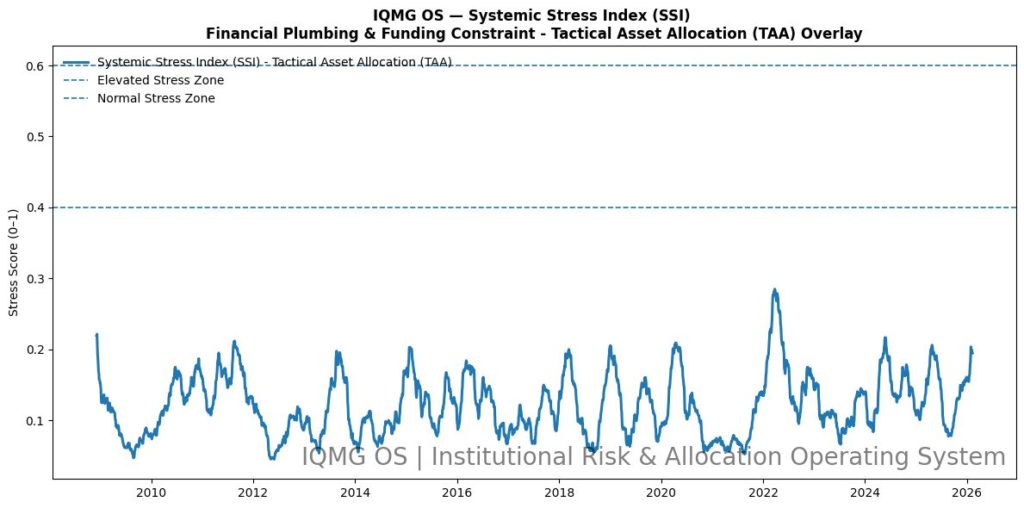
– Liquidity thins
– Correlations tighten
– Volatility clusters
– Risk premiums distort
IQMG OS is designed to recognize structural degradation before it becomes narrative.
AUTHORITY & ACCOUNTABILITY
IQMG OS is built for decision-makers with fiduciary responsibility.
If capital loss can be externalized — to the market, to timing, to advisors — this system is unnecessary.
IQMG OS is relevant only where authority carries irreversible downside.
It does not improve intelligence.
It reduces allowable exposure when intelligence becomes insufficient.
ENTRANCE STATEMENT
This is not an investment product.
It is not a model you delegate, customize, or outgrow.
IQMG OS exists for capital stewards who understand that drawdown is not an abstract number — it is institutional damage.
If you are looking for forecasts, conviction, or performance narratives, this system will disappoint you.
If you are responsible for capital that cannot afford structural failure, and you operate without career hedges when stress arrives, you may recognize its necessity.
There is nothing to trial here.
There is only a governance discipline to accept — or to reject — knowingly.
NOTES ON DISCLOSURE
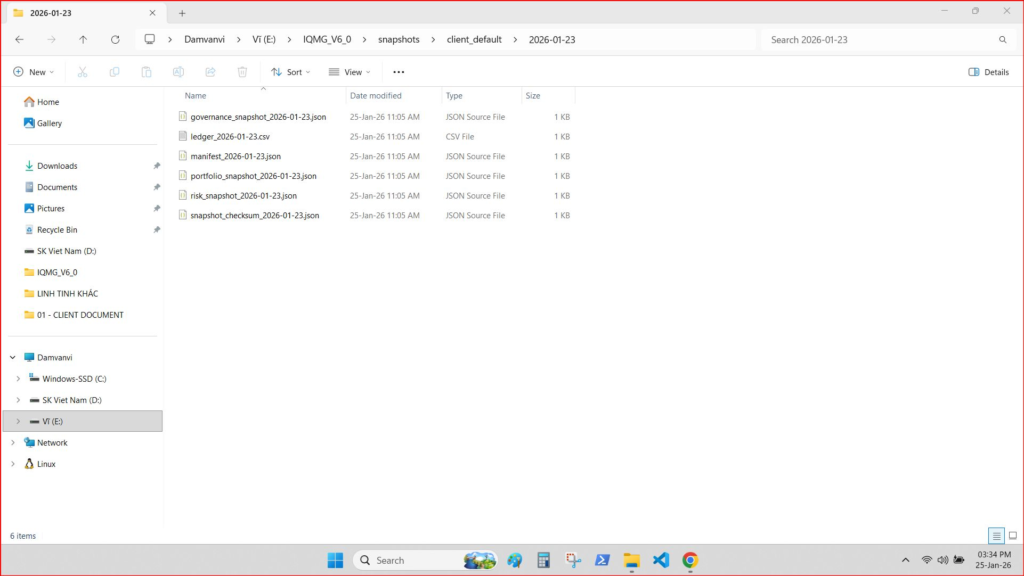
Operational execution snapshots are internal governance artifacts.
They are not marketing materials, not dashboards, and not intended for public interpretation.
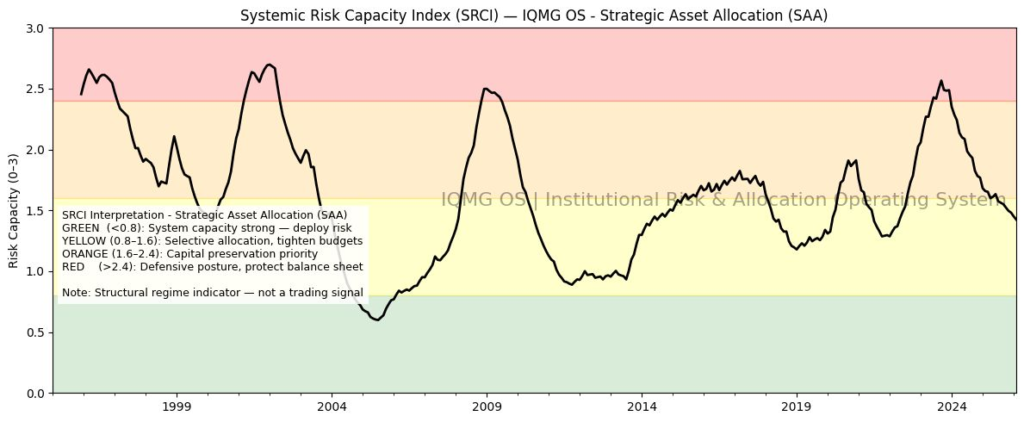
From Strategy to Overlay: Deploying IQMG OS on Institutional Futures.
Most large pensions and insurers do not need another strategy.
They need a governance layer that reshapes drawdown behavior of their existing core book.
IQMG OS was restructured into a fully futures-based overlay — executed through index and macro futures.
– Not a replacement for SAA.
– Not a tactical sleeve.
– A capital governance layer.
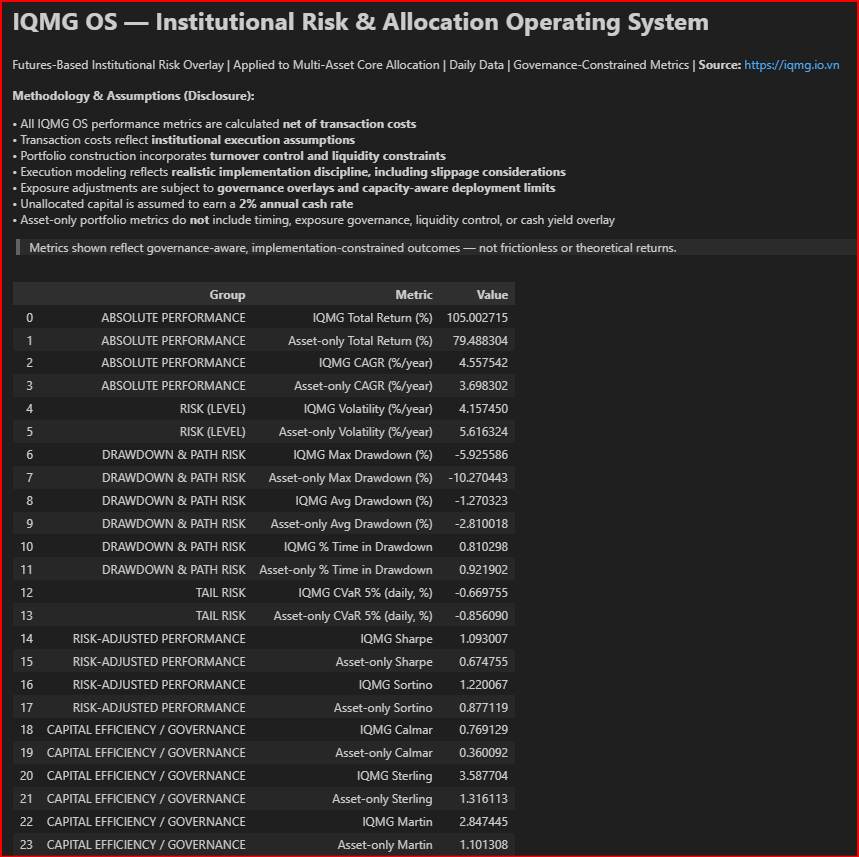
Futures-Based Balanced Mandate vs Asset-Only (mandate: balanced)
CAGR:
– IQMG 4.56% vs 3.70%
Volatility:
– IQMG 4.16% vs 5.62%
Max Drawdown:
– IQMG -5.93% vs -10.27%
Sharpe:
– IQMG 1.09 vs 0.67
The objective was not to maximize return.
It was to:
– Reduce drawdown depth
– Lower volatility
– Improve downside efficiency
– Maintain exposure discipline
All implemented via liquid index and Treasury futures.
– No forced liquidation of the core.
– No structural disruption of allocation.
– Capacity-aware execution.
At institutional scale, the real question is not: “Can this outperform?”
It is: “Can this reduce structural drawdown in a 50–100B allocation without breaking the system?”
IQMG OS does not replace the core.
It governs it.
******
Data Disclosure for Institutional Review:
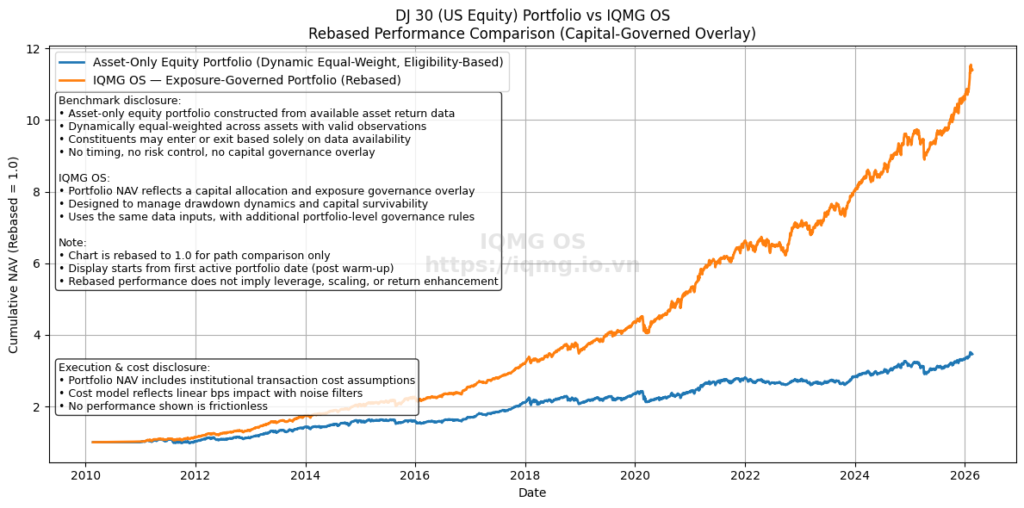
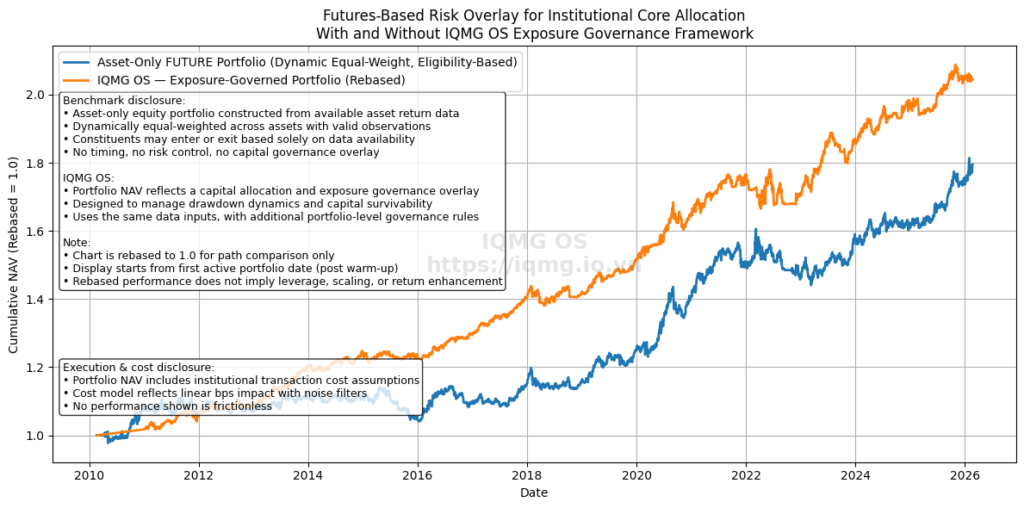
Chart 1: Equity curve stability through macro cycles (2010–2026).
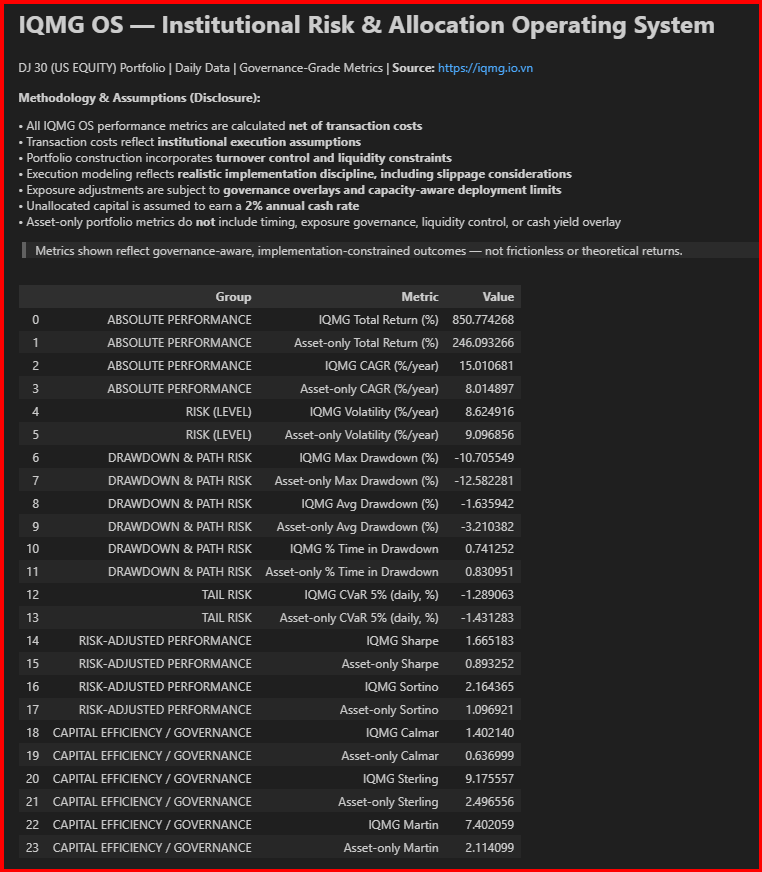
Chart 2: Risk-adjusted efficiency — Sharpe 1.09 | Max DD -5.92% | Calmar 0.76.
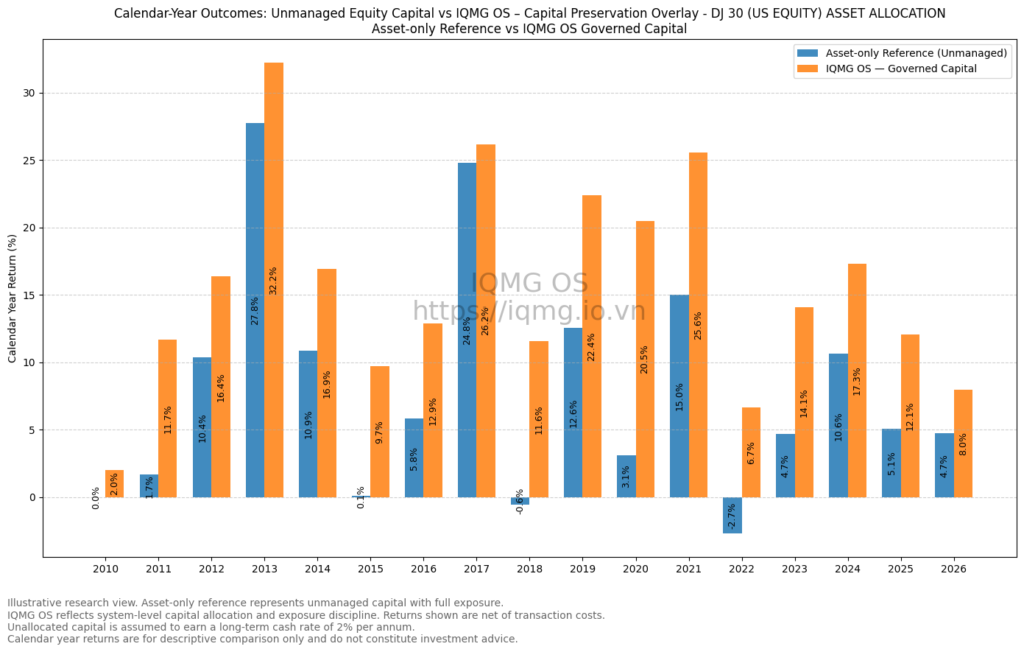
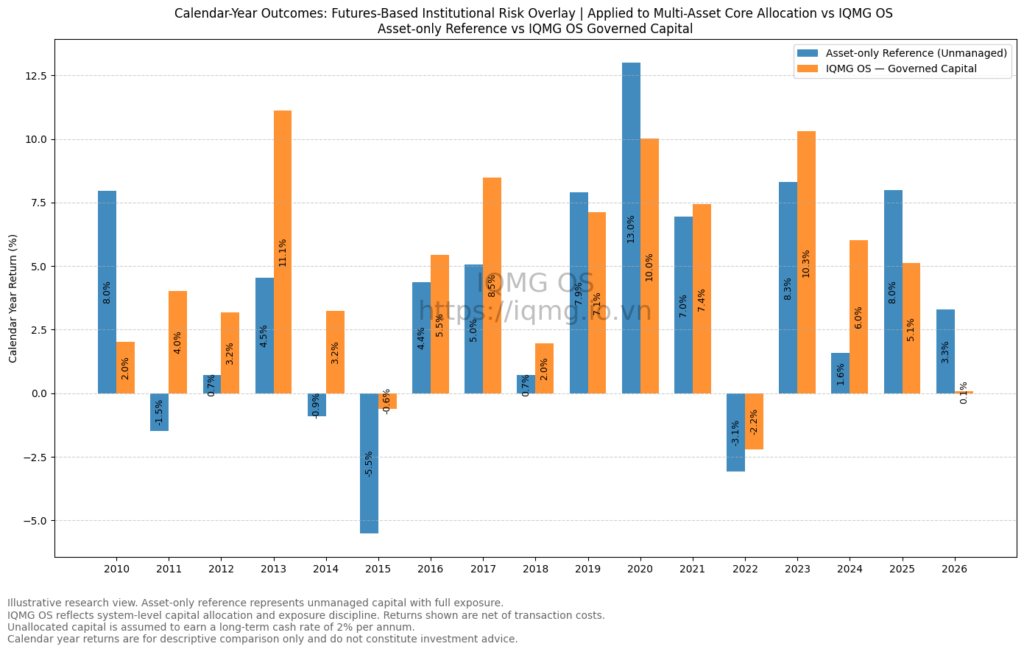
Chart 3: Calendar year resilience — Transforming tail-risk years (2015, 2022) into manageable outcomes.
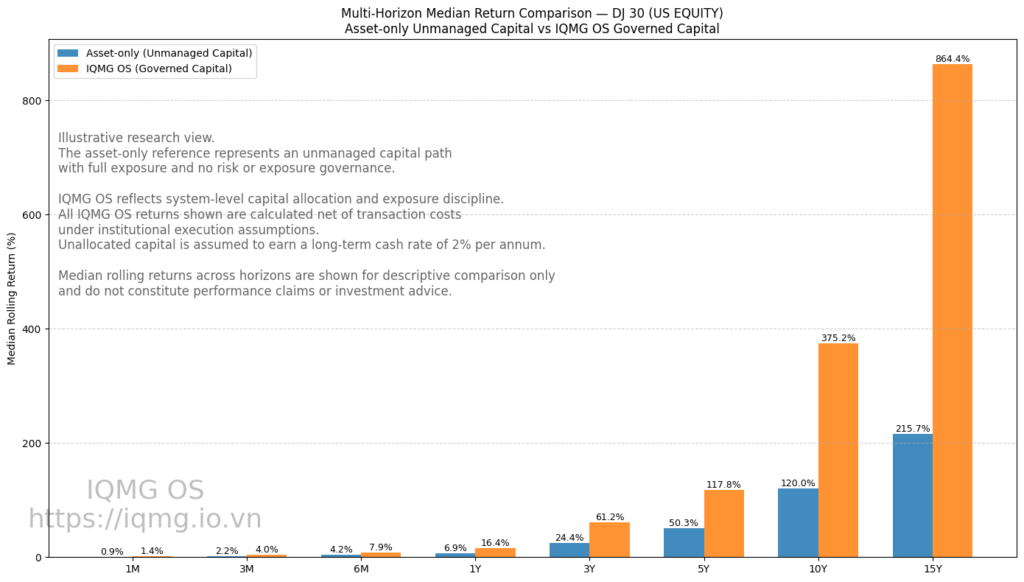
Chart 4: Compounding advantage over 1Y to 15Y horizons.
Execution & Governance Notes:
– Exposure adjustments are incremental, not binary
– Turnover is structurally constrained
– Implementation reflects institutional execution and liquidity limits
– All metrics shown are net of transaction costs
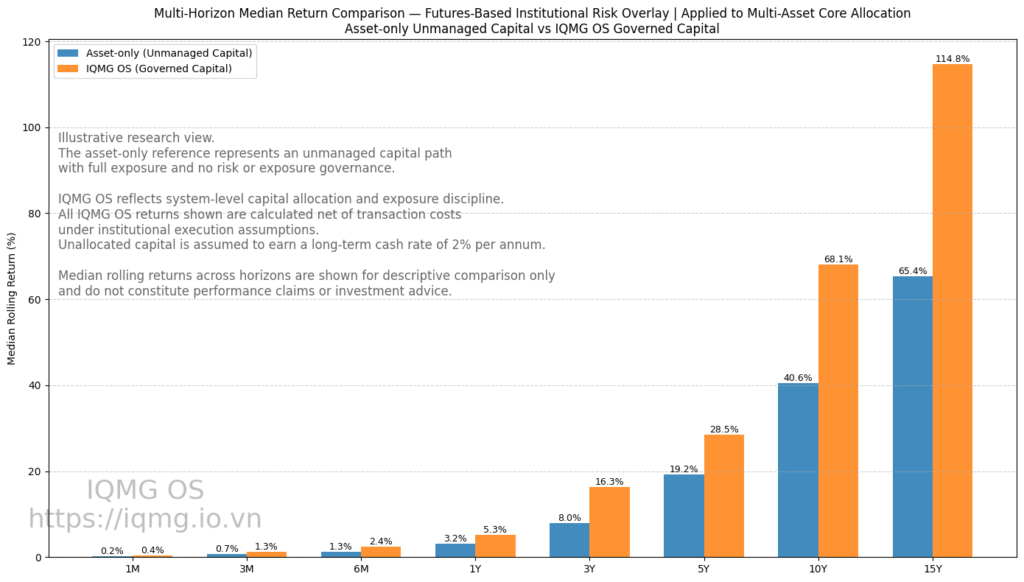
DJ30 US EQUITY PORTFOLIO
The figures below present governance-based capital comparisons across multiple asset universes under implementation constraints.
Each asset-only reference represents a fully exposed, unmanaged capital path without exposure control, liquidity discipline, or drawdown governance.
IQMG OS reflects system-level allocation with explicit exposure governance, turnover control, liquidity-aware sizing, and capacity-constrained execution. Results are calculated net of transaction costs under institutional execution assumptions. Unallocated capital is assumed to earn a 2% long-term cash rate.
Performance differences, where observed, reflect drawdown containment and exposure adjustment during regime deterioration — not leverage or artificial return enhancement. All paths are modeled as implementable under realistic liquidity and participation limits.
Each asset universe can operate independently as a standalone governed mandate or be combined within a multi-asset allocation framework. Construction assumptions incorporate capacity-aware deployment, supporting institutional scale to multi-billion-dollar capital bases.
Results are presented for governance-level analytical purposes only and do not constitute investment advice.